Septic System Replacement
A failing tank or drainfield doesn't always mean starting from zero — but it does mean re-permitting the system as if it were new.
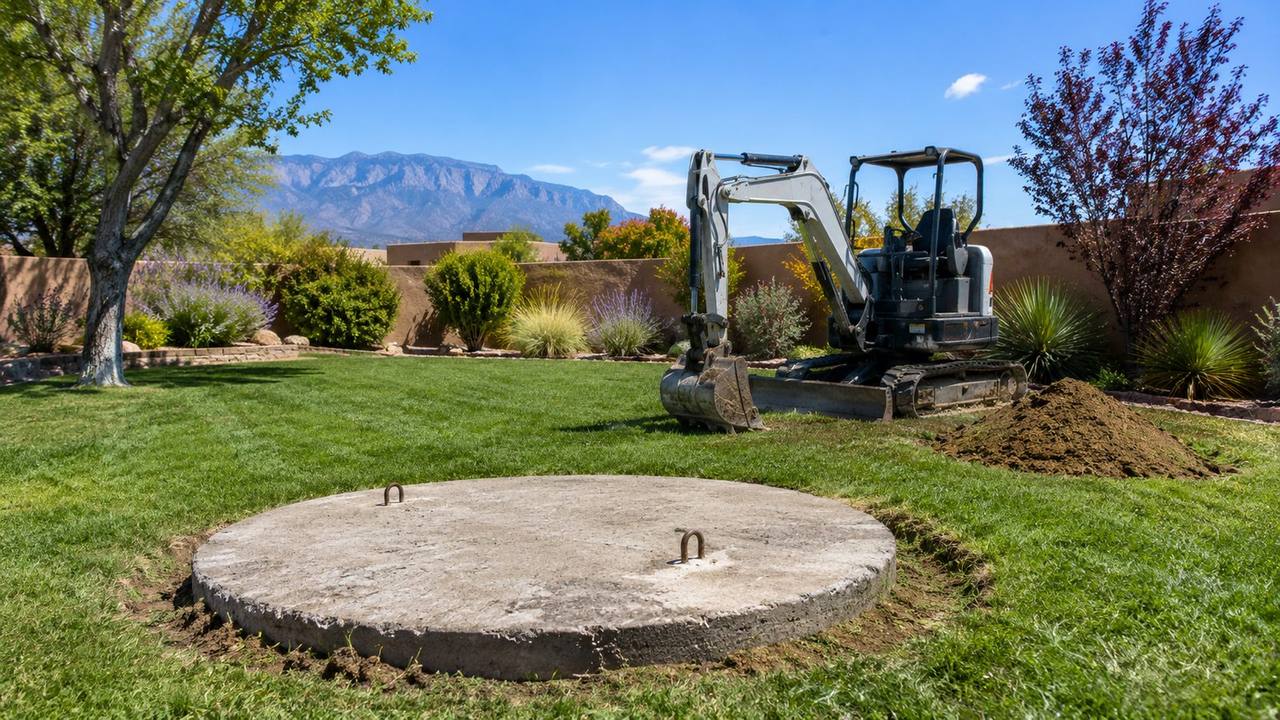
Most homes with a failing septic system aren't dealing with a defective tank — they're dealing with a system that's reached the end of its usable life, was undersized for the home, or has a drainfield that's saturated and can no longer absorb water. If you're seeing signs of a failing system — slow drains, sewage odor, a suspiciously green patch of lawn — replacement is usually the more cost-effective path over repeated repairs.
Why replacement isn't a simple swap
Because so much has changed since most older systems were installed — regulations, tank standards, setback requirements, and often the home itself (additions, extra bedrooms) — a replacement project is generally permitted the same way a brand-new installation would be: a current site evaluation, a fresh percolation test if your existing one is decades old, and a design that meets today's code, not the code your system was originally built under.
- Inspection of the failing tank and drainfield to confirm the failure point
- New percolation test if your drainfield is being relocated or your original test is outdated
- Design update reflecting your home's current bedroom count and fixture load
- Permit application for the replacement system
- Removal or decommissioning of the failed components per code
- Installation of the new tank and/or drainfield and final inspection
Repair vs. full replacement
Not every problem requires full replacement. A collapsed baffle, a cracked lid, or a clogged distribution box can sometimes be repaired. But a saturated drainfield, a tank that's undersized for the home it serves, or a system installed before 1976 (when tank baffles became a requirement) is usually a sign that repair is a temporary fix at best. A licensed installer can tell you honestly which category your system falls into after an inspection.
Not sure which category you're in? Read Signs You Need a Septic Replacement for the specific symptoms that separate a fixable issue from a system that's done.
What replacement typically costs
Replacement costs depend heavily on whether the tank, the drainfield, or both need to be redone, and whether your soil still supports a conventional system. See the full cost guide for typical ranges across the metro.
Get your system inspected
Describe what you're seeing and we'll connect you with a licensed installer who can tell you honestly whether you need a repair or a full replacement.
- Works with homes on both NMED and county-permitted properties
- Honest repair-vs-replace assessment
- Handles re-permitting as part of the project
Request received
Thanks — we've got your details and will be in touch shortly to connect you with a local septic professional.
Frequently Asked Questions
Pumping clears out solids temporarily, but it doesn't fix a saturated drainfield or a structurally failed tank. If your drainfield can no longer absorb water, pumping buys days or weeks, not a permanent fix.
Yes, in nearly all cases. A replacement is treated as a new construction or modification project under New Mexico's liquid waste regulations, which means a current permit application.
A licensed installer can inspect both during a site visit. Tank failures often show as backups closer to the house; drainfield failures usually show up as surfacing water or unusually green grass over the field itself.
Get an honest read on your system
Tell us what you're seeing and we'll connect you with a licensed local installer for an inspection.
Get a Free Quote